
Introduction Nestled in the heart of northern England, the city of York is one of…
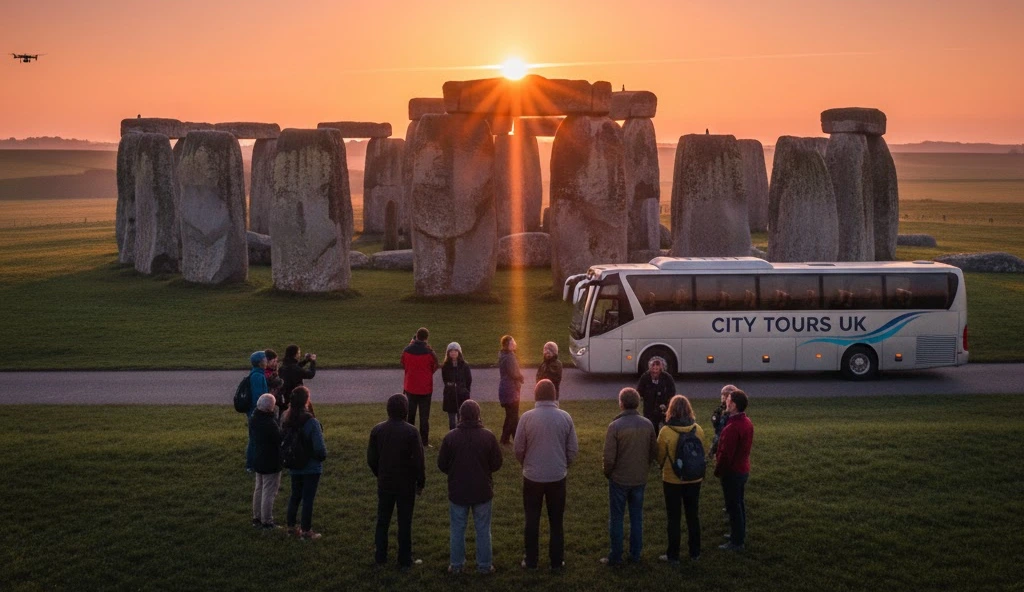
Why Stonehenge is More Than Just Rocks – A Journey Through Time
For thousands of years, Stonehenge has fascinated travelers, historians, and curious minds from every corner of the world. Standing proudly on the open plains of Wiltshire, this prehistoric site is far more than a circle of stones — it’s a silent witness to over 4,000 years of human history.
Today, people visit this UNESCO World Heritage Site through carefully curated Stonehenge tour packages, designed to help you experience its mystery and meaning up close.
A Brief History of Stonehenge
Archaeologists believe Stonehenge was constructed in several phases between 3000 BC and 2000 BC. The sheer effort involved is astonishing — the large sarsen stones, some weighing as much as 25 tons, were moved from about 20 miles away. The smaller bluestones came all the way from the Preseli Hills in Wales, roughly 150 miles distant.
How these stones were transported and lifted without modern tools remains one of the most remarkable engineering achievements of the ancient world.
Why Was Stonehenge Built?
The question “Why was Stonehenge built?” still sparks debate among experts. Most agree it wasn’t just one thing — rather, it likely served as a ceremonial site, a burial ground, and possibly an early observatory aligned with the sun.
Every summer solstice, the sunrise lines up perfectly with the Heel Stone, suggesting that Stonehenge’s builders understood the solar calendar far better than anyone expected for that era.
| Fun Fact: Over 200 human remains have been discovered near the monument, marking it as one of Britain’s largest known Neolithic burial sites. |
Exploring Stonehenge Today
Experiencing Stonehenge firsthand is a great idea, and guided Stonehenge tours are the perfect way to do it since they give a combination of storytelling, archaeology and history in the same package. Besides Stonehenge, the majority of these tours also include other sites such as Salisbury Cathedral and Avebury Stone Circle—both of which are essential to England’s prehistoric topography.
As per City Tours UK, their Stonehenge tour packages are designed to provide travelers with a profound connection to the site. Whether you choose to take an early-morning inner-circle visit or a small-group day trip led by a professional guide, you will have exceptional insights into how the stones influenced ancient rituals and still capture the imagination of modern society.
| Fun Data: More than 1.5 million people visit Stonehenge every year, making it one of the top ten most popular sites in the UK. |
The Science and Mystique Behind the Stones
Modern research has revealed even more layers to Stonehenge. Ground-penetrating radar has uncovered hidden pits, earthworks, and wooden structures beneath the site — evidence that it may have been part of a much larger ceremonial complex. Some archaeologists now believe it could have served as a place of healing or a hub for ancient astronomy.
| Fun Fact: Certain stones make a ringing sound when tapped, earning them the nickname “singing stones” among researchers. |
Plan Your Visit
For whichever reason—be it the history, the mystery, or the dawn’s quiet beauty over the stones—Stonehenge still guarantees an unrepeatable experience. A reliable tour from City Tours UK not only simplifies your journey but also gives you all the information you need—together with the professional insights and the means of travel that are most convenient for you, so that you can really enjoy your stay.
FAQs
1. What was the reason for the construction of Stonehenge?
The site was probably communal for worship, funerals, and making observations of solar occurrences such as solstices.
2. What is the age of Stonehenge?
It is believed that this monument was erected somewhere in the time frame of 3000 BC and 2000 BC — which is over 4,000 years ago.
3. Is it possible to enter the Stonehenge area?
Absolutely. Some Stonehenge tour packages come with inner-circle access during the early morning or late-night hours.
4. What is the distance between Stonehenge and London?
Around 90 miles (145 km) — approximately two hours by road.
Final Thought
In the end, Stonehenge isn’t just an ancient monument — it’s a story carved in stone, connecting modern visitors with people who lived millennia ago. Whether you go for its history, its mystery, or simply the quiet sense of wonder it inspires, one thing is certain: these stones still have something to say, if you take a moment to listen.

Related Posts



This Post Has 0 Comments